Fill Appointments

As mentioned in previous posts, during my surgery the plastic surgeon placed two tissue expanders under my chest muscle to replace the breast tissue removed by the breast surgeon.  In case you don’t know what a tissue expander is (I didn’t), it’s basically just a temporary, inflatable breast implant designed to stretch the skin and muscle to make room for a future, more permanent implant.  (See images below.)  Each of the expanders includes a port through which a saline solution is injected during fill appointments (thereby enlarging the expanders).

This past Thursday–roughly 2 and a half weeks after my surgery–I went in for my first fill appointment.  I wasn’t too nervous as I had done a lot of research on my own and based on conversations with other women who have had this, it really shouldn’t hurt. If anything, I was actually kind of excited as it meant that my body had healed a decent amount and getting the expanders filled would be kind of fun (in my mind).  To begin the appointment, the PA removed the steri-strips from both scars on my chest, which were still pretty raw.  She then took out a magnet to find the location of each expander’s port and marked the location on my skin.  She then inserted a needle through my skin at the marked location and, with a syringe, injected 60 CCs of saline into each expander.  (As mentioned in an earlier post, only a fraction of the total volume is injected during each fill appointment to allow the skin and muscles to slowly stretch.)
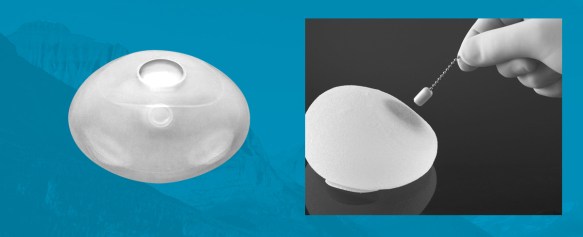
Expanders Magnet Port

Left:  an expander; Right: example of the port’s magnetic properties [Image courtesy of Specialty Surgical Products,  Inc.]
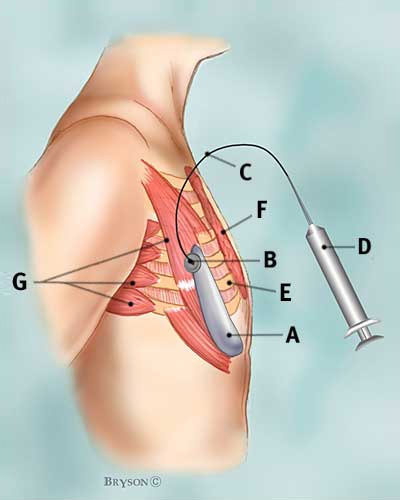
tissue_expander_unfilled_tcm8-329403

[Image courtesy of breastcancer.org]

A Tissue expander — unfilled
B Port
C Catheter
D Syringe
E Ribs
F Pectoralis major muscle
G Other muscles of the chest wall

Because I now have permanent loss of feeling in the chest area, the injections didn’t hurt at all (a nice perk).  The PA warned me, however, that I may have pain and discomfort later in the day or the next morning.  Unfortunately, she was right.  About three hours after the appointment, I began experiencing moderate pain in my chest which lasted for about a day. It wasn’t debilitating but noticeable enough that I barely slept that night (no longer on narcotics, just rotating Advil/Tylenol) and didn’t want to move much.

The plan is for me to continue with fill appointments on a weekly basis (with the exception of this week – Happy Turkey Day!) until I reach my desired size.  At that point I can schedule my final surgery which will be, at the earliest, early February.  One month before my final surgery, I have an additional fill appointment where the expanders are enlarged beyond my desired size to allow more room for Dr. Fine to work with during the final implant surgery.

One of the first questions I have received from oh, a strong 80% of people that I’ve spoken with about my surgery was, “So you getting bombs?” The quick and short answer is NO; I wouldn’t know what to do with them and would likely topple over (but still an entertaining thought…I think my family would die). After a few laughs and a “but really, just imagine it, hilarious” the question evolves into, “But seriously, what size and how do you decide?”

The doctor can’t tell you that X number of fill appointments will make you a B or C cup (or beyond, get it girl), as it completely varies based on the frame of the individual. What the PA and one of the women I spoke with recommended was to either: (1) buy a bra the size you want to be and continue with the fill appointments until the bra fits correctly or (2) continue the fill appointments until your clothes get to a point that they almost no longer fit. As I was happy with my body and chest size prior to the surgery, I plan to do a combo of 1 and 2. I don’t want to go to a point where I would have to order clothes a size up to fit my chest but then would need to get them tailored down to fit my body.  I also don’t want to look all that different. BUT – the option is always there for any woman that goes through this. I say: if you want it, get it. If you get it, flaunt it.   You’ve put your body through some shit, so if you decide to “go big or go home” then by all means do, who is anyone to judge.
Reconstruction

There are a number of breast reconstruction options after undergoing a single or double mastectomy. Some women opt not to get reconstruction and can choose to get a prosthesis. Determining which option is the right choice for an individual is based on numerous factors, including: whether the surgery is prophylactic or due to having breast cancer, if the individual is a candidate for nipple sparing (“subcutaneous”), chest size, and age. The decision will be made based on a discussion with your plastic surgeon who will recommend one (or potentially a few) option(s) based on your unique case.

There are three that my surgeon discussed with me, although he only recommended one. Regardless of which of the below approaches is taken, breast sensation is permanently lost in the mastectomy breast(s).

  1. Tissue Expander Implant: This is the “easiest” option of the three, comparatively, and the path that I’m taking. The hospital stay and recovery time is the shortest and there are no additional scars beyond the scar from the mastectomy, but it does take at least two operations. Also, there is flexibility in selecting the final breast size in bilateral cases (more on this below). Additional details can be found here.
  2. Latissimus Flap +/- Implant: This involves transplanting an oval flap of skin, fat, muscle, and blood vessels from your upper back to the chest wall which is used to reconstruct the breast. This option requires an additional night or two in the hospital compared to the Tissue Expander Implant and the recovery time is a few weeks longer. There will be additional scars on the patient’s back and a circle on the affected breast(s). A more eloquent explanation of this can be found here.
  3. Abdominal Tissue (TRAM, DIEP, SIEA): Essentially this involves transplanting excess flesh/tissue from the abdomen to the chest wall and using that to reconstruct the breast. This is the most involved option with an average hospital stay of three to four days, the longest recovery time, and additional scars on the patient’s lower abdomen and a circle on the affected breast(s). The one upside with this option is that due to the excess flesh/tissue taken from the abdomen, the patient also essentially gets an abdominoplasty (aka, flat abs). Again, a more eloquent explanation of this can be found here.


As mentioned above, I did the Tissue Expander Implant. Based on my physical build, weight, chest size pre-surgery, and because the surgery was prophylactic, the doctors were able to put the expanders in during my initial surgery immediately after Dr. Bethke (the breast surgeon) and his team removed all of the tissue. This is called immediate reconstruction whereas some women have to get this done in two surgeries.

Now that my drains are removed and my body has had about 2.5 weeks to heal, I should be able to start my fill appointments with the plastic surgeon, Dr. Fine. I go in once a week for these fill appointments during which Dr. Fine will inject a small amount of saline solution into each of the expanders. The maximum frequency allowed for these visits is once per week. This approach is taken to allow the skin to stretch a little at a time and even with this small amount there is still pain and discomfort following the appointment. Once I reach the size I want, I stop going in for these appointments. On average, if one goes in weekly, it takes 1 to 1.5 months. These appointments can be spaced out further to every two or three weeks, which some women who are also undergoing chemotherapy during this time may opt to do. Regardless of when I reach my ‘ideal size’, the earliest I can get the final surgery is three months post-op (so sometime early February). My first fill appointment is tomorrow.

There is one other step to the reconstruction which is the nipple reconstruction. Some women are candidates for a nipple sparing mastectomy (or subcutaneous mastectomy), where the nipple is not removed. There are different criteria that the breast surgeon considers, such as chest size pre-surgery and whether or not the woman had/has breast cancer (I know there are exceptions to this). Subcutaneous mastectomies are less common as some tissue is left behind which could later develop breast cancer (although the probability of getting it is < 2 to 3%). For women who have to have the nipple removed (simple or total mastectomy) they have three options for reconstruction.

  1. Using Tissue: In a separate surgery, the doctor makes a small incision on the breast, raising the tissue and forming it to mimic a nipple. You can then get the areola tattooed on, if desired.
  2. Nipple Tattoo: There are certified medical tattooists who specialize in 3-D nipple tattooing (Vinnie Myers is the most well known, who is also a former Army medic). You can find examples of their work online which I find both fascinating and impressive.
  3. No reconstruction

Day 11

I’m 11 days post-surgery and getting better everyday. I can shower 90% independently, it just takes a really long time. I still need assistance getting dressed and have limited wardrobe options. I’m up and moving more and have bursts of energy where I feel mostly normal other than the obvious (limited arm movements and inability to do certain things), but if you saw me sitting there and didn’t know I had surgery you would have no idea. There is still some pain and tightness but it’s at a very manageable level and I’m diligent with switching off between 650 mg Tylenol and 600 mg Ibuprofen every 3 – 4 hours. I do tire fairly quickly though and after being active or even just talking a lot (which I tend to do) I then completely zonk out.

I’ve been getting out daily for walks with my mom which feels so nice just to be outside. I still struggle with things, such as opening doors and getting coats on/off. For example, we stopped in Water Tower Place and I had to use the restroom. I was able to get into the restroom on my own by putting my back against the door and using my body to move it, but when I tried to leave I got stuck and had to knock and yell for my mom to open it. I kind of feel like an asshole having my mom open doors for me when we’re out, but it is what it is (sorry for the language, Cheryl). It’s also embarrassing needing assistance to get my coat on and off as I stand there with the coat halfway on, flailing my lower arms akin to the scene in Tommy Boy where Chris Farley is swinging around singing, ‘Fat Guy in a Little Coat’ (except I’m far less happy about the situation).

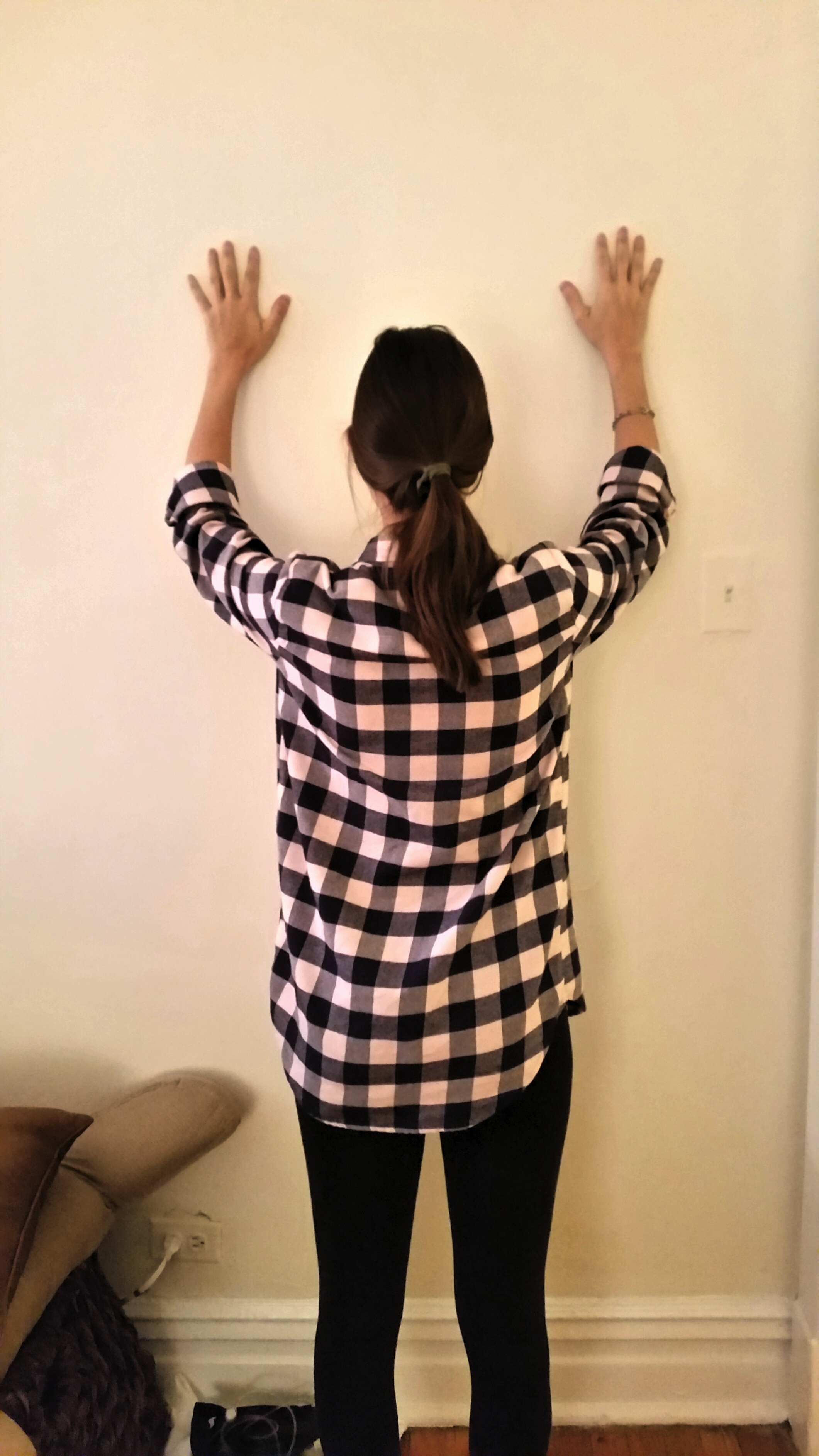
Today is my third day of PT which is going well, although I can’t really tell if I’m making progress. Some of the exercises feel like I’m tearing the scars open and/or muscles and ligaments in my arms and chest, although the PA assured me that there’s no way that would happen. Others are mild and not bad. I definitely recommend taking some pain meds 30 minutes to an hour before doing them. Below is one of them where I stand facing the wall and walk my hands up until I feel a stretch, then walk back down. Repeat 7 times. Pretty boring.

I look like a nut job and could have been cast in The Blair Witch Project or The Ring.

I look like a nut job and could have been cast in The Blair Witch Project or The Ring.

A lot of the swelling has gone down in the chest and there’s limited bruising left.  At times I can truly feel the expanders; it’s an odd feeling of two foreign objects in your body. One of the women said they had the same experience and once I get the final surgery in February where they replace the expanders with the permanent implants, that feeling goes away. I’ll write another time on how that whole process works as it is what I found the most fascinating and what others seem to have the most questions on.

1 Week Post-Op

It is eight days post-op and, as I’ve mentioned earlier, I’ve made more progress than I thought I would by this point. After the 12 block walk on Friday I only made it two blocks on Saturday and otherwise was asleep on the couch. Being someone that is used to running a lot and doing yoga / yoga sculpt, it is mentally painful to realize that walking < 1 mi is more draining than running 7 miles pre-surgery. But it still feels great to get out and move a bit and any progress is something.

I’m able to lift my arms almost to the point where my upper arm is parallel to the floor (with my elbows bent – kind of like I’m doing a chest press), although I’ve found that as the day goes on or my meds wear off it’s most definitely less than that. I still can’t move my arms very well straight back or straight up from my sides. My right arm also has a bit better movement than my left as well as less pain than my left side. As a result, I still can only wear loose button-ups / zip-ups and my mom has to help me get dressed.

I had separate appointments with each of my surgeons today and both went really well. They removed all four of the drains…drain free! I was not expecting this when I went in as, on average (from my understanding), you typically get two removed (one per side) ~1.5 weeks post-surgery and then the final drains removed the week after that. The determination for when the drains can be removed is based on the output from each drain. My mom was stripping the drains every six to eight hours, after which she poured the output of each into separate jars which she then measured. Three of them have had about the same output while one of them barely had anything, which is completely normal for them to vary. She tracked all of this in a packet of papers that the plastic surgeon (Dr. Fine) provided us. Once total output for one side (two drains combined) is less than 30 cc’s  (cc = cubic centimeter) in a 24-hour period, then they can be removed. As of yesterday, I was at 16 and 24 cc’s compared to last Wednesday morning when I was at 52 and 74 cc’s.

For anyone who may get this surgery at some point, the drains really are more uncomfortable than painful and it’s an annoyance to have to carry around these things that are sutured into your sides. I feel like I complained about them a lot but it really isn’t anything unbearable, and again everyone has a different experience. Other things that can be painful that surprised me: sneezing, coughing, laughing really hard, blowing my nose, yawning, taking a deep breath, going from lying down to sitting up and then from sitting up to standing.

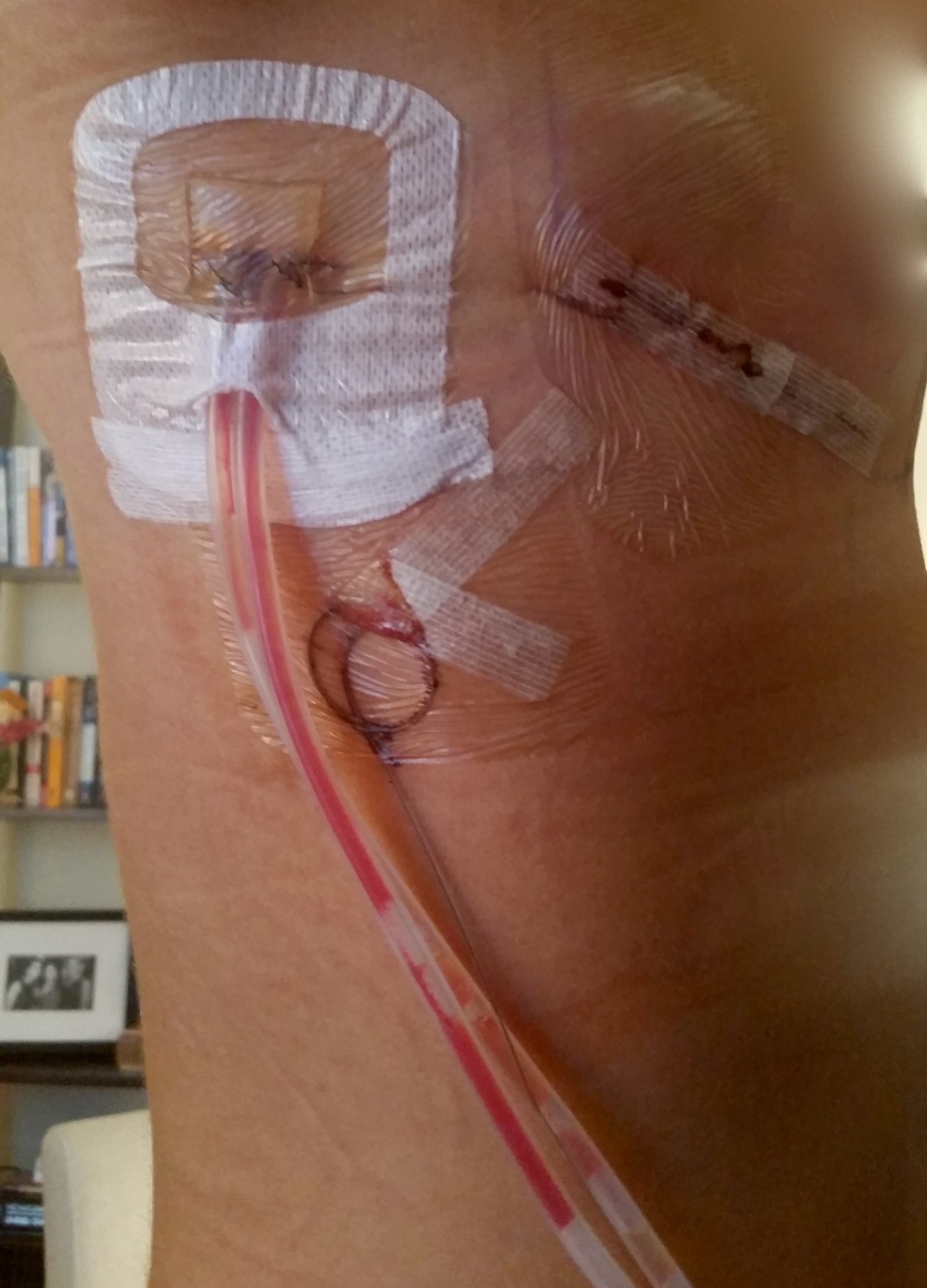
Getting the drains removed, although incredibly exciting in the end, was not a blast. The PA (Physician Assistant) first removes the adhesive bandage holding the drains securely against your skin and snips the sutures that held them in place. I was told this would hurt like removing a bandaid. False. That adhesive is STRONG. It is a Mark McGwire circa 1998 steroids bandaid (Go Cards). You then take a deep breath in and on your exhale the PA removes one drain and then the other. Or in my case, “Oh, this one feels a little stuck” and it takes a few attempts. Even my mom, nurse Cheryl (she literally used to be a surgical intensive nurse in a university setting), almost asked the PA if she could sit down because she could see the drains snaking through my chest and causing my skin to gather where it was adhered to “something.” It is a weird feeling (you can feel the drain moving) and definitely hurt for me, although it sounds like my experience truly is an outlier based on conversations with others. Also, it was all over in five minutes. I’ll have gauze pads taped over the drain sites for the next 48 hours as additional drainage is common and I now get to start my at-home physical therapy to regain movement of my arms.

I’m continuing to alter between Tylenol and Advil and taking the Hydrocodone and Benadryl only at night. I have noticed that I have more pain and tightness with slightly more limited movement in switching to this but that will get better every day and I want to get off the narcotics.

The Women that Inspired Me

I need to thank three amazing women–Jessica, Hilary, and Stephanie–for sharing their stories with me.  Their stories (below) helped me make the difficult decision to do the surgery, and also helped me know what to expect during the recovery.  Their willingness to share their entire story and experience–down to the most minute and gruesome detail– has been more beneficial than anything my surgeons and genetic counselors could have prepared me with.  All three are incredibly strong, kind, and positive individuals. You share a special bond having gone through similar procedures and everyone has this willingness and desire to pay it forward.

Stephanie – Breast Cancer Survivor/Bilateral Mastectomy

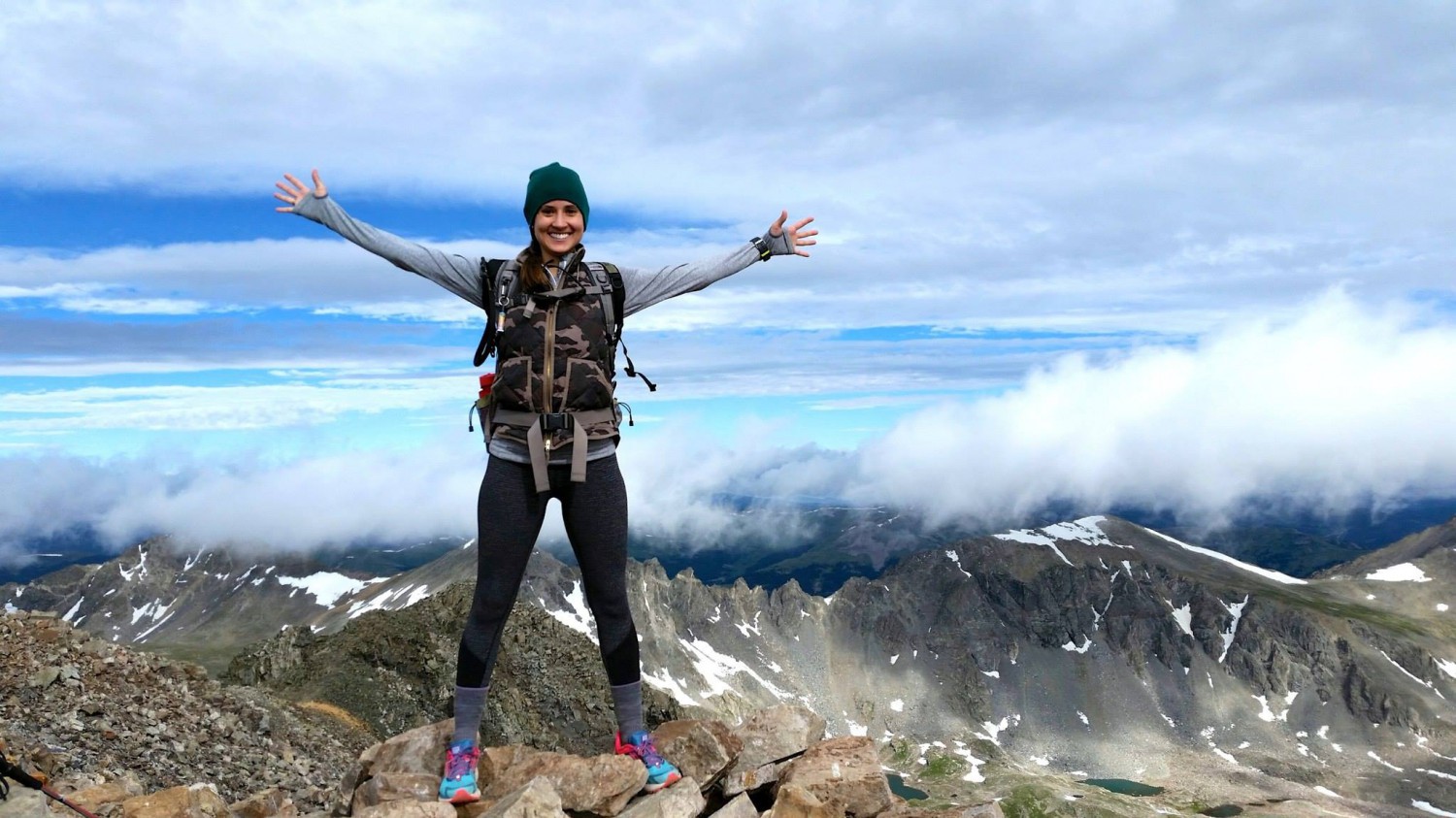
Stephanie was the first woman I spoke with.  Stephanie is a petite, beautiful, smiley, bad-ass attorney that was diagnosed with breast cancer at the age of 25 and underwent a bilateral mastectomy (she’s 28 now).  Stephanie also went to Wash U and was a year ahead of me.  My best friend from Wash U, Lisa, knew Stephanie and, when I found out I carried the BRCA2 gene, Lisa recommended I reach out to her.  About a year and a half ago I messaged Stephanie and she immediately replied that she’d love to share her experience with me.  We spent a few hours over sushi at Mirai (delicious) where she walked me through her story, starting with when she found out she had cancer all the way through how she was doing now.  She literally covered every detail; nothing was too personal.  It was an incredibly eye-opening and helpful conversation and I distinctly remember her saying something along the lines of “if your biggest fear or thing holding you back from doing the surgery is fear of the surgery itself, then you should do it. I wish I had that option where now I will always have the chance of a recurrence.”  Stephanie had her last chemo treatment EOY 2013 and is still doing great.  She got married this year and is kicking ass and taking names as an associate with a highly reputable law firm here in Chicago. She came over to eat and hang out tonight, and it was great hearing how she’s doing now and how her recovery process is going.

stephanie steel (schiffman) steph steele schifmann

Jessica – BRCA Carrier/Prophylactic Bilateral Mastectomy

The next woman that I spoke with was Jessica, a BRCA carrier who underwent a prophylactic bilateral mastectomy in her 30s.  A good friend of mine from college, Ben, is Jessica’s cousin and put us in touch as he knew that she recently had the procedure and that I had scheduled mine.  Around mid-August of this year, we finally connected on the phone and ended up talking for a few hours.  At this time, Jessica  was exactly five weeks post-surgery and had just been cleared to do laundry and open her refrigerator door (those two facts clearly stuck with me).   Upon learning she was BRCA positive, Jessica knew she would get the surgery at some point and it was more a matter of when. She’s married with two little boys, so finding the right time to be out of commission for weeks had to be incredibly difficult. She also shared her full experience, thoughts, emotions, etc. She is now back and working out almost to her former full ability, although she described some exercises as being just a bit too weird of a feeling so she avoids them (e.g., push-ups), but she is doing great and is very happy she got the surgery.

jessica ripplejessica ripple 2

Hilary – Breast Cancer Survivor/Bilateral Mastectomy

The last woman I spoke to is Hilary, who had low stage breast cancer and underwent a bilateral mastectomy in September 2014.  A good friend of mine from West Point, Sam, put us in touch.  Sam knew about my upcoming surgery, and when he heard that Hilary had undergone a similar procedure a year ago, he asked her if she’d be willing to speak to me. He described her as a “dominantly beautiful woman with an insatiable drive for success. Wife and mother of three who is commonly referred to as the ‘cancer ninja’, as she is a two time cancer survivor.”  We had been texting for awhile and finally synced up on a call about a week and a half before my surgery.  She also shared her full history and any pointers and advice with me in terms of what to expect pre- and post-op. She forwarded me some pictures of what it looked like a week out and then more recently which was incredibly helpful (I ended up texting her a picture earlier this week to see if something was normal and she was able to calm me down by showing how she had the same thing, totally fine). She has a blog as well which is pretty amazing, particularly to learn about her full story.

hilary hilary2

Making Moves

[Editor’s Note:  At some point in her life, Therese began referring to our parents as “Tom” and “Cheryl” when discussing them with others.  (When directly addressing them, she still uses “Dad” and “Mom,” respectively. 50% of the time.)  To correct this would alter the tone of this entry, so we’re leaving it as is.  Sorry Tom and Cheryl. This is from two days ago.]

This morning was better with more energy, less pain, and less tightness in my chest (as compared to yesterday, on average). Within two hours though I had a bad headache, the pain was back, my energy was down, and the tightness in my chest returned.  I thought the pain would be the worst part of the recovery, but actually I think it’s the tightness in my chest.  It’s hard to explain, but it’s like I can’t get a full breath; it’s pretty unnerving.  But apparently this is normal.

My aunt and uncle happened to be in town and came over to visit, which was really nice of them.  My aunt is a breast cancer survivor and shared aspects of her experience that I had never heard before, which meant a lot to me.  Going through this surgery without cancer was scary enough; I can’t imagine going through this after being diagnosed with cancer.

Highlight of the day: Tom Fox’s arrival.  Now I have a doctor and a nurse taking care of me.    We went out for a short walk (aka shuffle, with me looking like Randy from ‘A Christmas Story’ when his mom bundles him up to walk to school) of about twelve blocks. Once we got home, I started feeling not so hot: pressure, pain, headache. Plus now there’s this weird tingling sensation across the chest area. You know that feeling you get after your foot has fallen asleep and is starting to regain blood flow where it feels like pins and needles are all over your skin? It feels like that. I consulted Dr. Fox (hi Tom) who said that it’s normal as there are still nerve endings in there which were jostled a bit by increased activity.

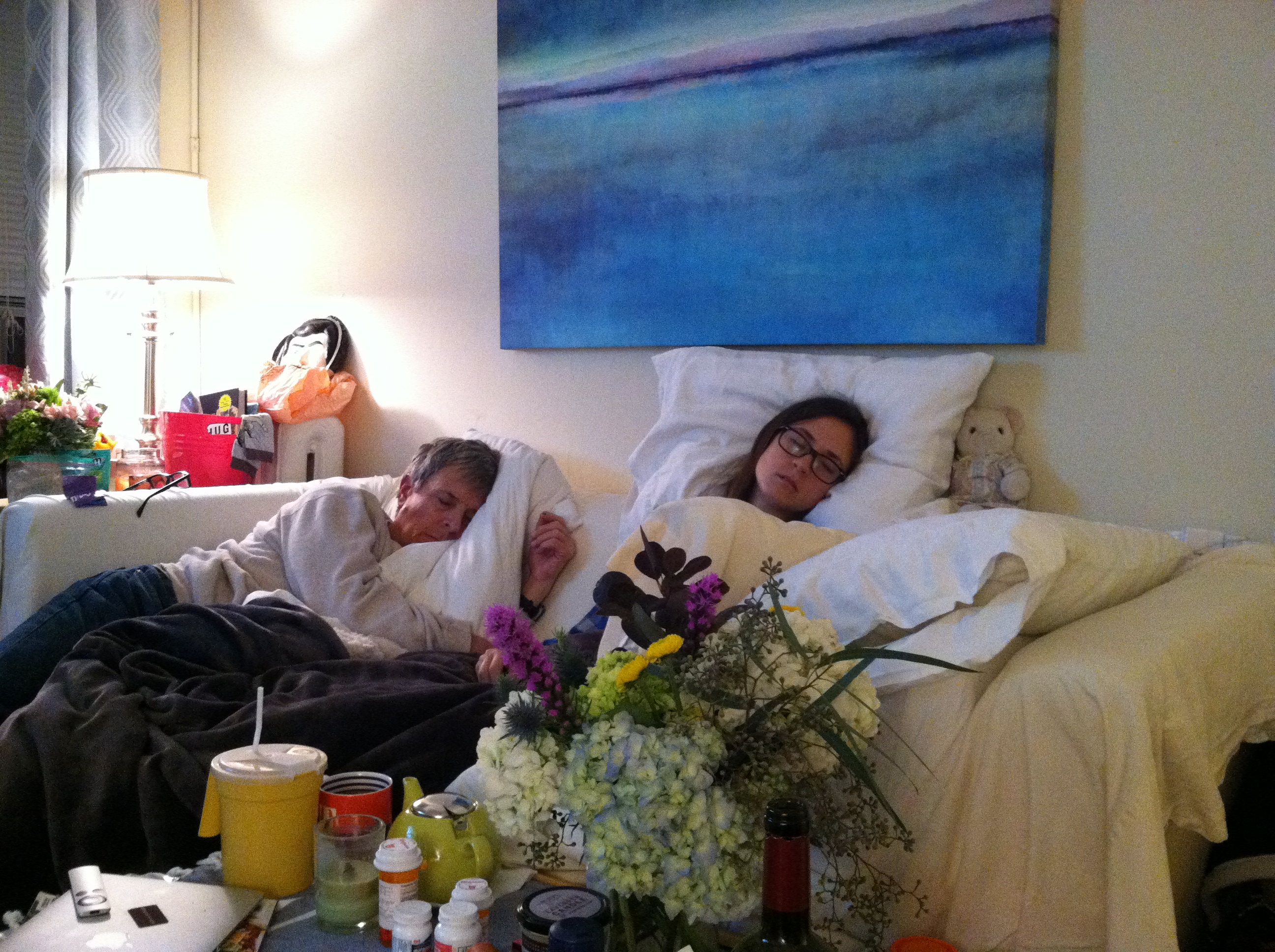
My mom sent this picture out to a text chain that my family (parents, 5 kids, son & 2 daughters-in-law) has going with the caption,

My mom sent this picture out to a text chain that my family (parents, 5 kids, son & 2 daughters-in-law) has going with the caption, “My Lively Companions”…Cheryl and her jokes

I feel like my recovery has kind of been like a sine graph (nerd alert)…not too shabby then terrible and miserable and I want to go sleep. In general though, I think my recovery has been better than the average. I have pretty decent movement of the arms, even from the shoulders (less T-Rex arms than expected) and I have more ‘not too shabby’ moments than unbearable.  Yesterday I started to wean off the narcotics, switching off every three hours between Hydrocodone and 600 mg of ibuprofen. Every six hours I take an antibiotic  and in the evenings I take benadryl to help me sleep. It’s incredibly important (as stressed to me by everyone) to stay ahead of the pain so my alarm is set for every three hours, even during the night. I also was able to remove this Scopolamine patch from behind my right ear, which the anesthesiologist put on pre-surgery as a way to prevent nausea. I have my first follow-up appointments with both surgeons on Tuesday and am hoping I can get two of the drains removed.

Taking It One Day at a Time

[Editor’s note:  Upon request for a “journal type entry”, Therese sent us (Liz and Mary) a description of what she’s feeling today but asked us to edit for typos as she’s still not up to par.]

I’m now three days out from surgery.  The pain is worse than it was while in the hospital although I have less nausea and am less loopy from the anesthesia. (The worst pain, so far, was last night.)  I’m never fully pain free unless I’m sleeping, which I am luckily doing a decent amount of, although it is not consistent through the night.  It hurts to lay flat on my back, so I’m generally always laying at about 45 degrees.  I’m not used to sleeping on an incline, or on my back period, so that may also be contributing to my segmented sleep pattern.

There is a constant, strong pressure across my chest and I can’t quite get a full breath in because it hurts too much.  It feels like my chest is being ripped open when I try to use my hands to sit myself up to 90 degrees, or to get from the 90-degree sitting position to a standing position. This has gotten better though and I manage it.  The drains are definitely contributing to my discomfort and pain; I can feel them in my chest and can see them pushing against my skin.  I cannot wait to get them out.

Right now I spend all of my time sitting (at an incline) in my living room where I don’t move much generally.  I currently have to rely on others for basic daily needs.  How does anyone do this alone?  For example, using the restroom is a big event.  Walking (shuffling) the 72 feet to the bathroom doorway takes 5 minutes.  I’m fearful of falling from the pain and/or the dizziness caused by the pain meds and hitting my arms and/or chest on the ground.  Even worse, I’m frightened of falling and instinctively bracing my fall using my arms.  Also, I can’t really hold on to anyone for support, or hang on them to support myself, because using my arms away from my body is very uncomfortable.  I do need to be assisted using the bathroom.  The damn elastic waistband is too much for me to pull down/up.  To some extent, I still try to use my arms as much as I can, even though it hurts, because I don’t want to lose mobility in my arms (as I’ve read is possible).  My surgeons have told me I can use my arms normally but no significant weight or exercises while the drains are in and then I will be specifically instructed as to the progression.  It does take time to eat because I lift the fork or spoon cautiously trying to bend only my elbow rather than my entire arm which is more uncomfortable.  I must say though, the adult sippy cup and straw provided by the hospital has been a lifesaver.

I’m cleared to shower but the thought scares me as I still have the drains hanging from me and soapy water going over my scars and drain ports makes me queasy.  Cheryl has been persistent though.  Yesterday Mary and I really bonded when, wearing nothing but my underwear, Mary wiped me down with baby wipes. Today though, for the first time, I took a shower, i.e., I stood in the tub with my drains held by a lanyard around my neck and sometimes holding my drains out from me while Cheryl washed my hair.  Though I love my mom and sister very much, standing naked in front of someone (even your family) and having them bathe you is kind of a degrading experience.  I think the last time someone had to help me bathe was when I was a baby, and I’m sure I didn’t like it much then either.  It is refreshing to have clean hair though, and I really don’t know what I would do without my mom here to help.  The whole showering process wiped me out and I slept for an hour as soon as I got back to the sofa.

Up until recently I refused to look at the drains, scars, my chest – any changes to my body from the surgery.  I thought the site of them would make me faint.  Fun fact:  almost fainted when this summer the drains were placed in front of me as the nurse explained how they would be placed in surgery and the care they would require.  Even in the hospital I could not look at the drainage when the nurse would empty and measure the contents.  My sister Liz covered the containers that were used to measure as they sat in my room. She was really good about distracting me during the stripping of the drains while Mary observed and talked to the nurse.  I’m sure not everyone would have this experience, but for me, it was more than I could handle.  Yesterday I finally looked at the pictures my sisters took and I must say, the incisions look 100x better than I expected.  As is most often the case, my imagination painted a picture of something much worse than the real thing.  Still though, it’s really weird to see my chest deformed in the way it is; almost like it’s not mine (as I was warned).  What’s also weird is that I feel pain in the general vicinity of where I no longer have breasts, but the skin there is numb to the touch (and will always be).  Despite all of this, I know that eventually it all will be fine and I have confidence in my reconstructive surgeon. The final reconstruction/implants will be completed in February.

Day 3 Post Surgery

T got some better sleep last night. She is still waking up every few hours consistently, day and night, but she seemed to be in a little less pain this morning. Mary removed her pain pump last night. This was the skinny looking line that you can see below her drain tubes in the pictures from the latest post. The pain pump is a local anesthetic that she had a “switch” for – it was a large, clear disk that was full of the medication, and she could push the button every 30 minutes, to activate the release of the pain medicine at the site of the incisions. This usually lasts patients for about 72 hours post surgery. Because T didn’t feel that it was significantly helping with her pain, and because it was the potential cause for the uncomfortable rash on her back, she had Mary pull it out last night. It was a very quick process – she didn’t feel pain, but she could feel the line moving through her until it came out.

With the pain pump removed, she now will rely on oral pain medication as needed, as well as an antibiotic for the next week, to prevent any type of infection at the incision site or drain locations. Mary and I are back in Seattle & Gainesville now, although we both wish we could stay and take care of her with our mom for as long as she needs!

Removing the Wrap

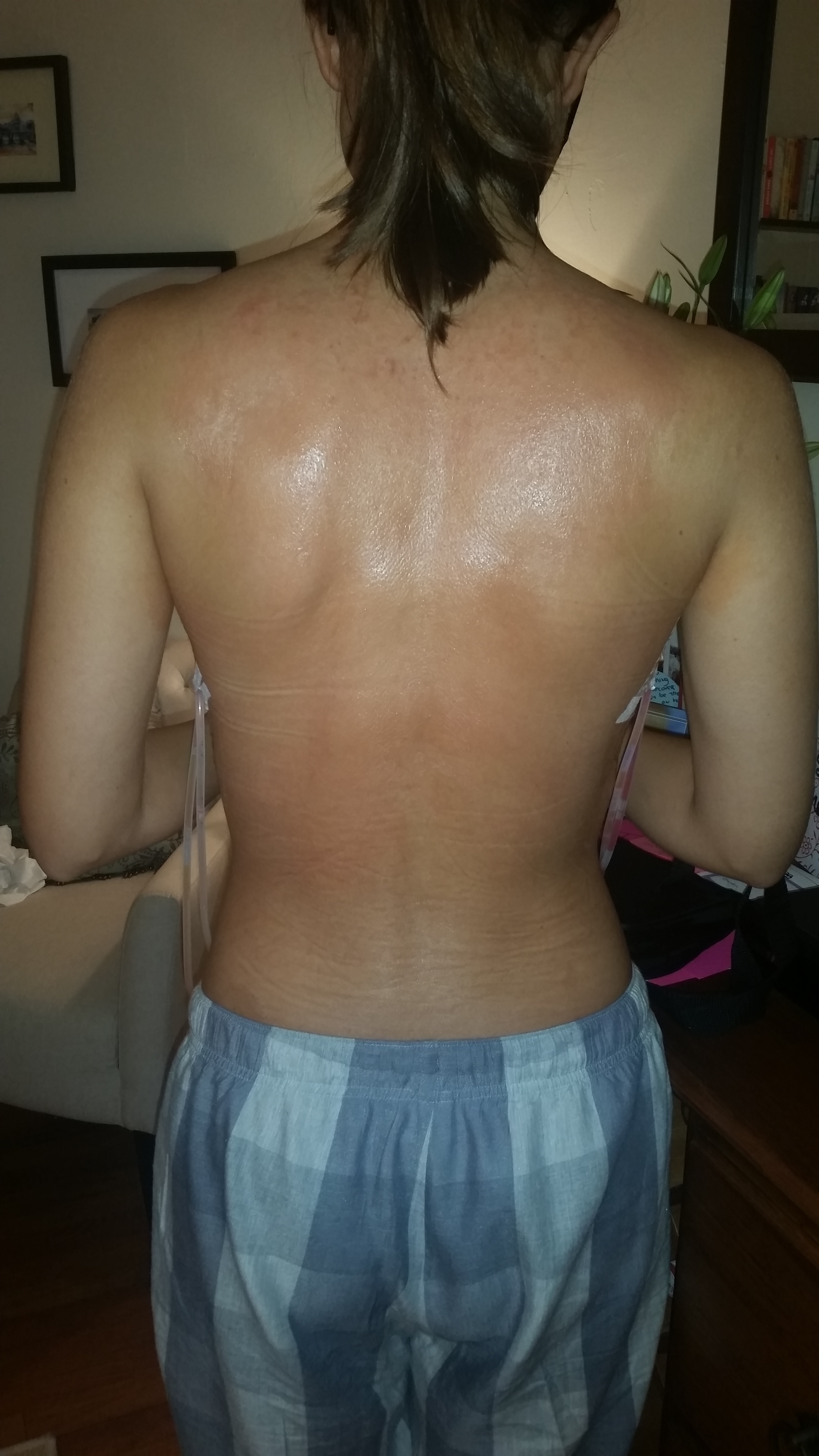
Don’t worry, I’m not posting topless pics of Therese, or at least not from the front.  (Although, if you are considering a mastectomy or have been through one, Therese would be happy to share those pictures privately.)

Therese started getting itchy on her back yesterday morning, and by last night it was a full-blown rash.  The picture below doesn’t really do it justice.  We’re not sure what caused the rash, but our best guess is that the hospital bed sheets (and whatever detergent they nuc them with) is not sitting well with her skin.  Good news is, she doesn’t have the mobility to itch it.  Not sure she agrees this is good news.  We think the Benadryl and hydrocortisone cream are starting to make a little progress though, so hopefully we can kick this thing today.

mystery rash

mystery rash

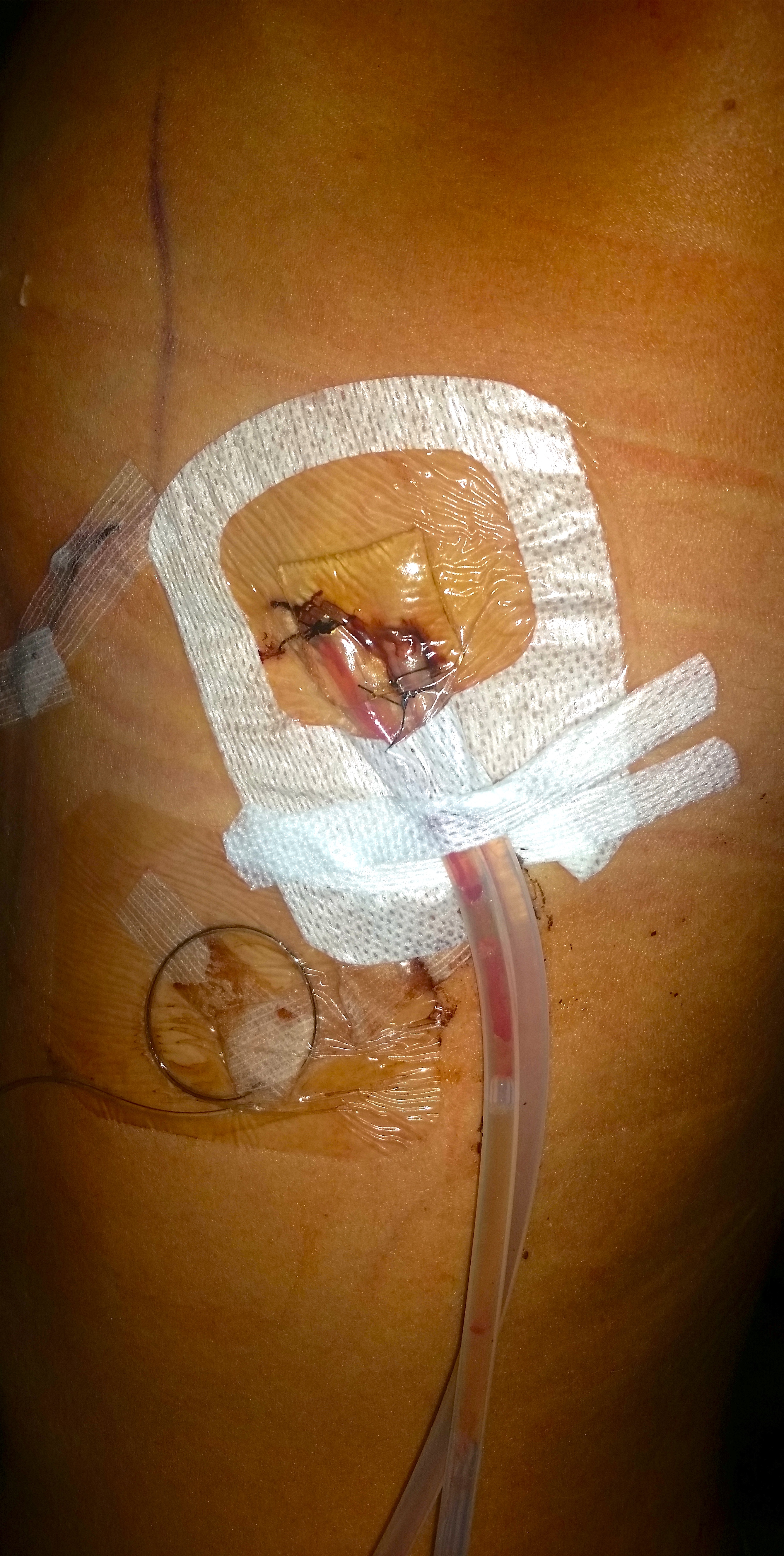
In the meantime we removed her wrap and pajamas and gave her a “shower” with baby wipes.  Below you can see her left and right drain ports.  In the right drain port picture, you can also see most of her right incision. The really skinny tube below the drain port is the local anesthetic line.  Her stomach and chest are actually quite swollen, though you can’t really tell because she’s a skinny bitch.  I took 20+ additional pictures of her incisions and chest area, and for the first time she looked at the pictures.  (She’s going to blog about that experience later.)  In my non-expert opinion, I think her incisions look great.  The whole process was quite emotional and exhausting for her so she’s passed out now.

left drain

left drain

right drain

right drain and incision

Home from the hospital. Nurse Cheryl time.

20151103_202046  DoubleMast_Drains

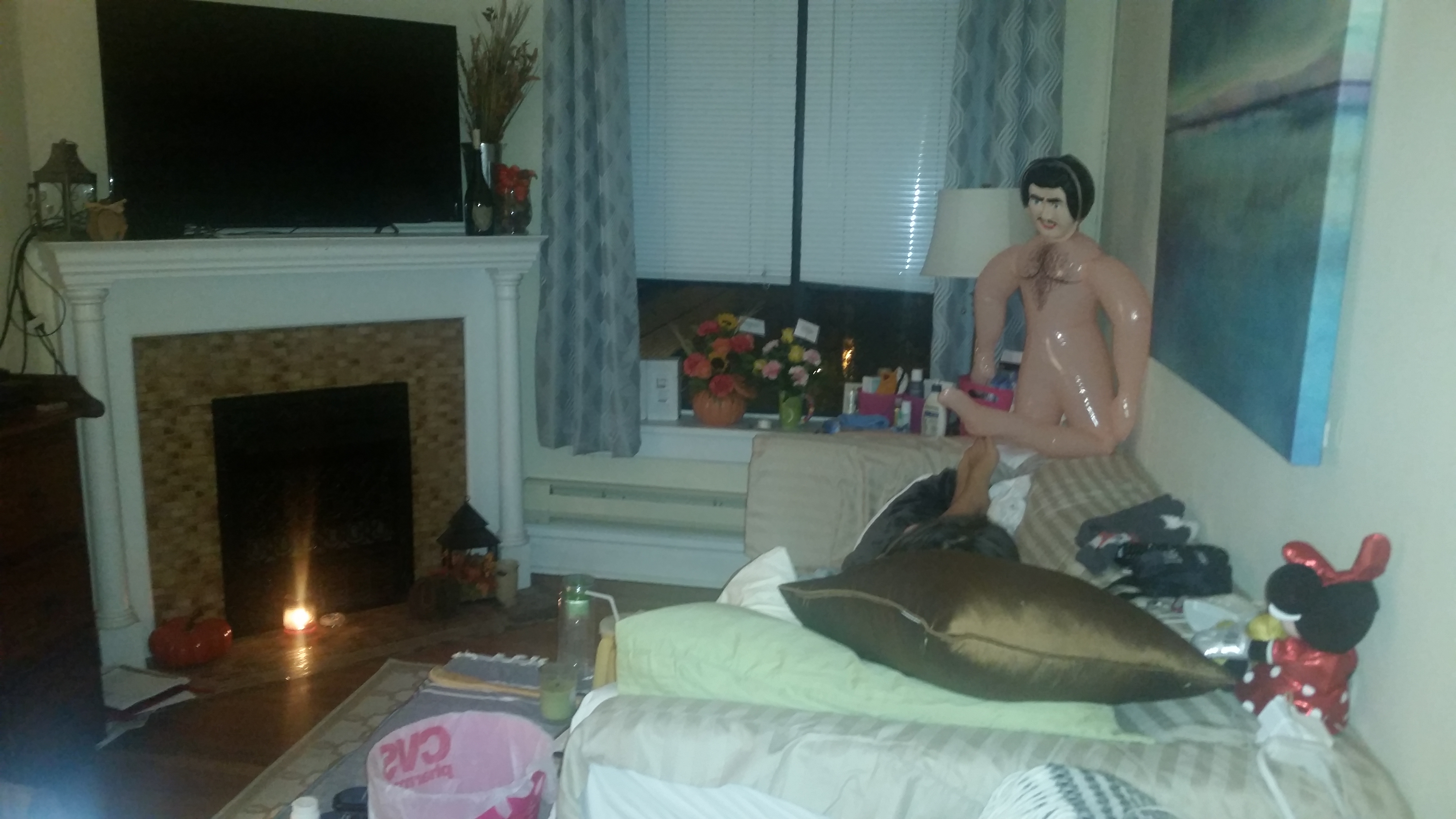
Therese was released from the hospital today around 1:00 pm and is now resting at home under the care of Nurse Cheryl.  Her bed is too tall for her to climb into, so she’s set up in the TV room under the watchful eye of her dad and brothers, all rolled up into a single, inflatable, mustached, emasculated doll with chest hair.  Her pain is a little greater today, though still manageable with hydrocodone every 4 hours and a localized anesthetic pump (see video below).